
In Disgust of Machiavelli

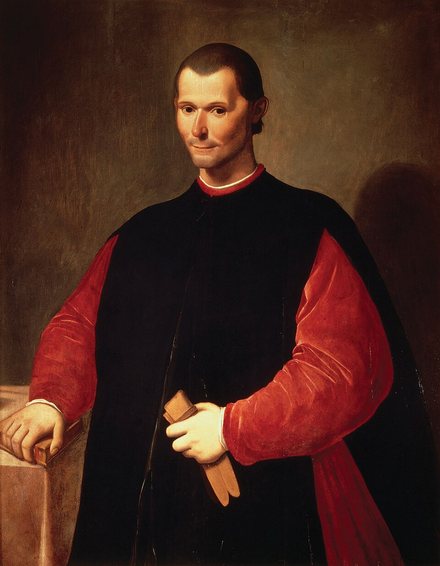
I have finally read some Machiavelli. Specifically, his Letter to Francesco Vettori.
And boy, do I despise Machiavelli. Rarely have I, in such a short span of time, come to entirely distrust the meaning of a person's word. His letter ends with the sign-off "Be prosperous", but does he actually care for Vettori? Was he saying this to curry favor? Was he saying this through gritted teeth? Earnest and direct writing was utterly absent in this letter, and I can no longer tell.
To back up, I admit I have a little sympathy with his situation; Machiavelli had been a powerful member of the Florentine court, but when the Medici family came into power they imprisoned and tortured their political opponents, which included him. He was eventually released from jail but exiled for a year. At the end of his exile, he receives a letter from Francesco Vettori, who also a member of the Florentine court but had switched his allegiance to the Medici family just before they took power, so he did not face their wrath. Vettori finally sends his old colleague a letter, telling him about his new life as a prestigious diplomat in Rome, and inviting Machiavelli to visit him in Rome where he works as a key diplomat.

Machiavelli naturally wants to take full advantage of this opportunity to make an alliance, yet also does not want to fall for some trick, or walk back into enemy territory due to misreading an invitation meant simply as a politeness. So he writes back telling Vettori about what a day in his own life is like, telling him of the book he is writing that he is proud of (later "The Prince"), and saying that of course he'd like to visit but mentioning offhandedly that a part of his mind worries a little about whether he will be thrown in jail, and asks Vettori to put this little concern at ease. Then he gets back to talking about his book. And in some ways it's reasonable to speak in this roundabout way; it's thoughtful to give the person a letter worth reading purely out of interest rather than obligation, and also to give them an easy out without making them apologize for any miscommunication. He also alludes to mail being read by others, so indirection means that interlopers may not grasp the full meaning.
But still, I feel the Slytherin slime dripping off of his every paragraph. It is hard to pinpoint it precisely, though an early clue is that each passage takes people a fair amount of debate to pin down the meaning of. For instance the letter begins "Never were divine favors late", and many I spoke to could not tell if Machiavelli is forgiving Vettori for not writing to him in over a year, or whether he is (with some plausibly deniability) sarcastically suggesting that Vettori is not very divine. Later, after learning that Vettori is finding his work boring ("Every four days I write a letter to the Lords of the Ten, telling them some stale and unimportant news, since I have nothing else to write."), he writes:
 But still, I feel the Slytherin slime dripping off of his every paragraph. It is hard to pinpoint it precisely, though an early clue is that each passage takes people a fair amount of debate to pin down the meaning of. For instance the letter begins "Never were divine favors late", and many I spoke to could not tell if Machiavelli is forgiving Vettori for not writing to him in over a year, or whether he is (with some plausibly deniability) sarcastically suggesting that Vettori is not very divine. Later, after learning that Vettori is finding his work boring ("Every four days I write a letter to the Lords of the Ten, telling them some stale and unimportant news, since I have nothing else to write."), he writes:


I was very pleased to see how orderedly and quietly you exercise this public office; and I urge you to continue so, for whoever lets go of his own convenience for the convenience of others, only loses his own and gets no thanks from them.
— N. M., 10 Dec. 1513
I feel he is perhaps damning with faint praise, highlighting how little he is getting done. More importantly, this is at once highly cynical about other people, while intimating that he has Vettori's best interests at heart (urging him to act in his own best interest), which I can't help but notice is a very classical Slytherin stance to fake toward allies, a loyal second-in-command who would always do what's best for you.
Machiavelli's also gives a constant appearance of humility, but it cannot be taken at face value. He ends by saying he would be happy to be made use of by the Medici lords "even if they should begin by making me roll a stone", yet he also says that in his mind he feels equal to the great writers of the past like Dante and Petrarch. He deflatingly describes his writing as "my whimsies", yet at the same time says it is fit for the Duke of Florence and addresses it directly to "his Magnificience, Giuliano". Perhaps he shows genuine humility, but perhaps he is falsely posing as servile to seem harmless and curry favor.
Consider the most important request in his letter—asking for reassurance that he will not be jailed and tortured if he accepts Vettori's invitation and travels back to the city. Once again, I don't know whether to can take his meanings straightforwardly.
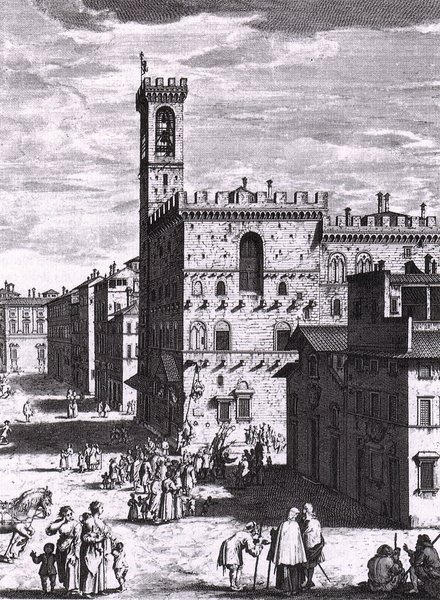

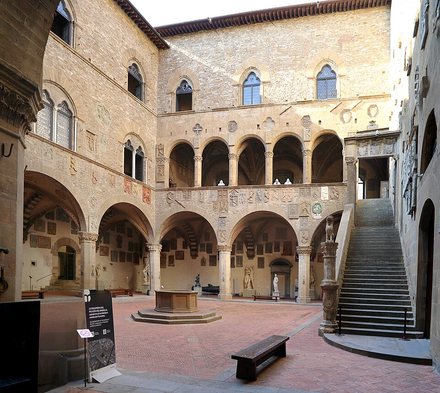

“You wish, magnificent ambassador, that I leave this life and come to enjoy your life with you” he writes. “I will do it in any case, but what tempts me now is certain dealings of mine which I will have done in six weeks. What makes me be doubtful is that the Soderini are there, whom I would be forced, if I came, to visit and speak with. I should fear that at my return I would not expect to get off at my house, but I would get off at the Bargello... I beg you to relieve me of this fear, and then I will come in the time stated to meet you anyway.”
Let's make this a little simpler.
- If I visit, I will feel compelled to visit the Soderini (the former political rulers who were overthrown by the Medici, Machiavelli's former allies who he was imprisoned for being allied with)
- Then I would be imprisoned under suspicion of coordinating with them (the Bargello is the police headquarters)
He says it indirectly, almost mildly, imagining dismounting his horse and surprisingly being at the police station.
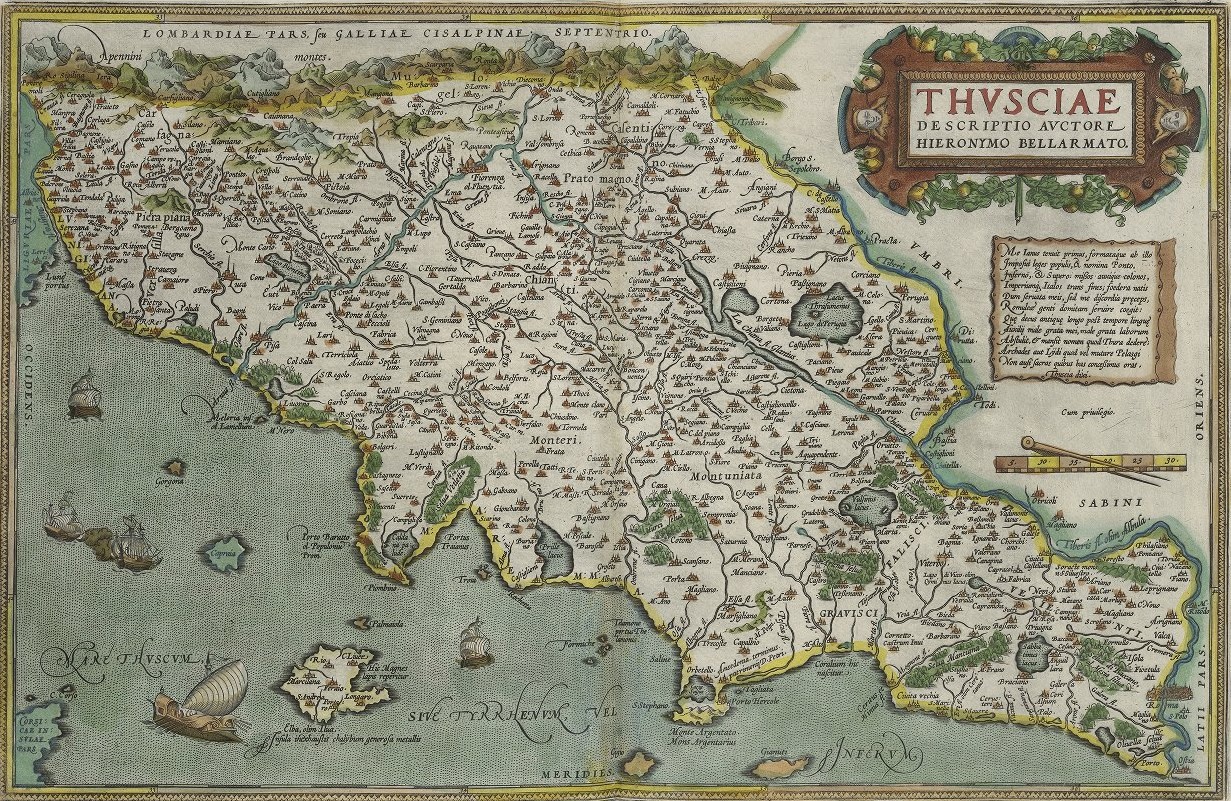
Girolamo Bellarmato, Thusciae descriptio, from Ortelius’s atlas (c. 1608)

He keeps insisting that he'll do it anyway, essentially supplicating himself, saying "I will do whatever you wish, but please save me my fears", which again is craven and I don't believe he thinks that's right. He doesn't actually think he is below this person, so it is a false facade. And he begs Vettori to relieve him of this fear. Again, this lowering himself in the face of power, is something I find distasteful, especially because he does not believe it. I think it can be noble to supplicate yourself to a rightful leader, but to maximally bend the knee to someone, to say you will do whatever they say and want the best for them and beg their help, just because they have power over you, is undignified.
Having said that, I think Machiavelli thinks very highly of himself, which leads me to the conclusion that he is only doing this because he thinks he is clever to get one over on Vettori. Which is deception, and that is also a sin.
People who admire Machiavelli tell me that this is all in good fun, and just part of the games that the courtiers used to play in Florence in 1513. Well, perhaps, but just as I would not like to work any of the woodworking jobs described in the letter, I also do not wish to play their political games. I am a LessWrong rationalist and I want communication where people can be direct and earnest. If people around me write in such obfuscated and plausibly-deniable ways, I shall shoo them away, to play with other cats like them.
Adding Slytherins to a social scene makes communication harder, wondering if someone is saying something because they believe it or because it is useful for them to say it. And finding out that you were correct to be worried, means that all of the words lose their value. Zvi speaks of this.
Here are quotes from the book Moral Mazes by Robert Jackall that I found on Zvi's blog that remind me of the issues with language being used in this way, about corporate culture at major corporations.
Discreet suggestions, hints, and coded messages take the place of command; this, of course, places a premium on subordinates’ abilities to read correctly their bosses’ vaguely articulated or completely unstated wishes. One cannot even criticize one’s subordinates to one’s own superior without risking a negative evaluation of one’s own managerial judgment.
For the most part, euphemistic language is not used with the intent to deceive. Managers past a certain point, as suggested earlier, are assumed to be “maze-bright” and able to “read between the lines” of a conversation or a memorandum and to distinguish accurately suggestions from directives, inquiries from investigations, and bluffs from threats. Managers who are “maze-dense,” like the manager at Weft Corporation who, though told somewhat indirectly that he was fired, did not realize his fate until the following day, might consider the oblique, elliptical quality of managerial language to skirt deceit. However, most often when managers use euphemistic language with each other (and it is important to remember that in private among trusted others their language can be very direct, colorful, and indeed earthy), its principal purpose is to communicate certain meanings within specific contexts with the implicit understanding that should the context change, a new, more appropriate meaning can be attached to the language already used. In this sense, the corporation is a place where people are not held to what they say because it is generally understood that their word is always provisional.
After all, as one executive says, “We lie all the time, but if everyone knows that we’re lying, is a lie really a lie?”